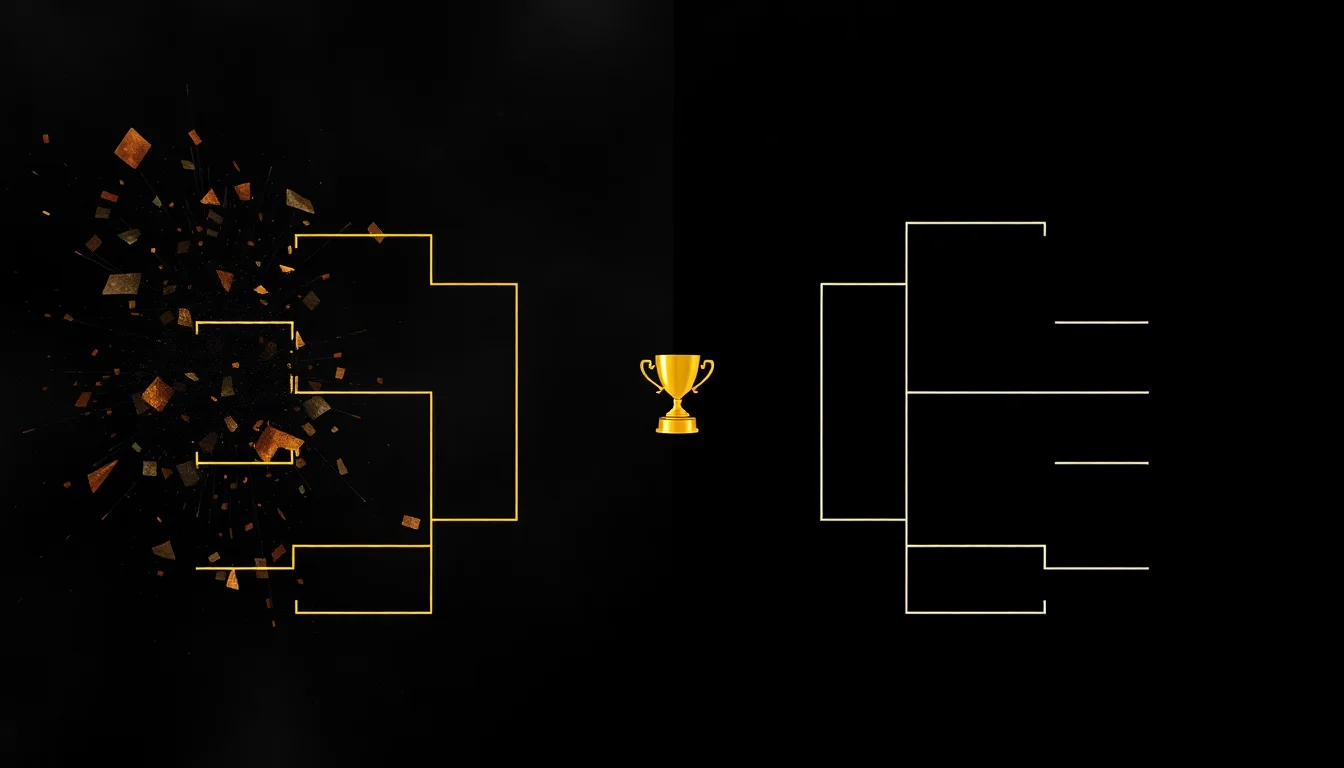
We have a problem with the 2026 tournament draw, and it has nothing to do with bad luck. FIFA's seeding system was built to distribute quality evenly across the bracket, and this draw does the exact opposite.
One half contains six of the world's top ten ranked teams at draw time. Before a single ball is kicked, at least four genuine title contenders are guaranteed to eliminate each other before the semifinals.
History shows bracket structure determines tournament narrative, not just results. In 1974, East and West Germany were deliberately split to prevent an embarrassing final; in 2014, Brazil's half of the draw gave the hosts a structurally softer route to the semis, a route they used to reach it before collapsing against Germany.
The 2022 Qatar draw offered a preview at group level: Group G packed Germany, Spain, Japan, and Costa Rica into one four-team slot. The 2026 draw amplifies that same compression across an entire half of a 48-team bracket, which is a categorically different scale of distortion.
Spain, ranked third in the world, anchors the opposite half alongside a quality drop-off that gives any team in that side a structurally easier path to the final. The counter-argument is that clustering elite teams produces better knockout football and that surprise runs define World Cup history regardless. That argument collapses the moment you accept FIFA's own stated purpose for seeding: to protect top teams from each other until the latter stages, not to sacrifice half of them before the quarterfinals.
Our verdict: the 2026 final will feature one team from the overloaded half, exhausted and battle-hardened, against one team from the easier half that arrived relatively fresh. The structural beneficiary wins the trophy, and the post-tournament debate about seeding reform finally forces FIFA to act.
This article was researched and drafted with AI assistance and reviewed by our editorial team.