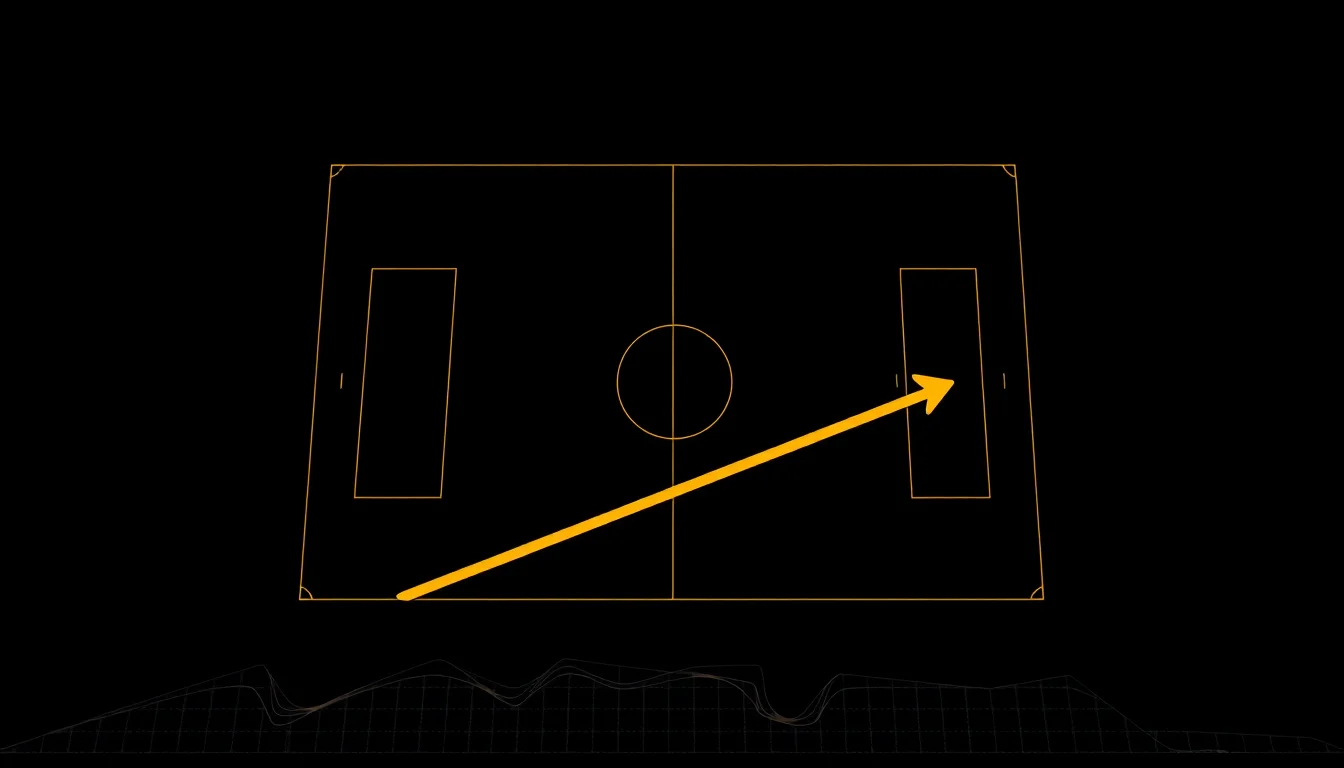
 Brazil
The debate around Neymar and the 2026 tournament has, until now, been framed entirely around the wrong question. We have spent months asking whether Neymar deserves a squad place, when the real question was always whether Brazil had the right manager to build a system worthy of him. With Carlo Ancelotti now confirmed in the role, that question has a credible answer for the first time.
This is not sentiment. Ancelotti's appointment is a structural decision with a clear tactical logic, and the evidence from his managerial career makes the case better than any wishful thinking about legacy or redemption narratives could.
The mandate Ancelotti arrives with
Ancelotti has been appointed with an explicit brief: balance Neymar's integration into the starting system while maintaining the squad depth and rotation options that a 48-team, expanded 2026 tournament demands. That dual mandate would expose most managers. For Ancelotti, it describes his entire career methodology.
Three Champions League titles sit on his record. Each came at clubs where the central challenge was not controlling the best players in the world, but designing systems flexible enough to accommodate their positional unpredictability. At Real Madrid, the task was Cristiano Ronaldo, a forward who refused to be fixed to a flank, drifting centrally, retreating to combine, surging beyond the defensive line. The standard managerial response to that kind of positional fluidity is constraint. Ancelotti's response was architecture: a 4-3-3 that provided structural discipline while leaving deliberate space for creative chaos to operate within it.
Neymar requires an identical structural philosophy. His best football has never come from systems that told him where to be. It has come from systems that told everyone else where to be, and then let him improvise inside those boundaries.
What the Madrid precedent actually tells us
The 2014-15 Madrid season is the most instructive case study here. Ronaldo's variable positioning within Ancelotti's 4-3-3 framework was not a problem to be managed; it was the feature the system was designed around. The midfield three provided the defensive compactness and positional discipline that allowed the attacking line its freedom. The full-backs pushed high to maintain width when Ronaldo drifted inside. The structure did not suffer because one player was fluid. The structure existed precisely to absorb that fluidity.
Brazil's squad depth reinforces why this approach is viable at the 2026 tournament. The Seleção possesses sufficient midfield and attacking options to rotate around a primary creative player without sacrificing defensive stability. Ancelotti does not need to choose between accommodating Neymar and maintaining squad balance. Brazil's depth means the system can flex to protect and utilize Neymar's positional unpredictability while ensuring other parts of the pitch are covered by players capable of operating within a defined structure. That is, precisely, the Madrid template applied to a national team context.
The counter-argument deserves a serious hearing
The case against this narrative is not trivial, and we will not treat it as such. Neymar turns 34 during the 2026 tournament cycle. His injury history, accumulated across years of high-impact football, raises legitimate questions about physical availability and sustained output. His goal contributions have declined. The creative output numbers remain respectable but the finishing and direct impact metrics point downward. The honest version of this concern is not that Neymar is bad, but that even the most tactically gifted manager in world football cannot reverse what age and accumulated physical wear have taken.
There is a version of this story where Ancelotti arrives with a sound structural plan and a diminishing asset. Where the 4-3-3 flexibility works perfectly on the training pitch and then Neymar's body, or his form, or both, prevents the system from ever being tested under tournament pressure. That is a real risk. Dismissing it would be intellectually dishonest.
But the counter-argument, taken seriously, still does not defeat the appointment. It shifts the stakes. If Neymar is fully fit and in form, Ancelotti's structural approach maximizes him better than any alternative. If Neymar is diminished, Ancelotti's squad management credentials and rotation philosophy mean Brazil will not collapse around a single player the way they have in previous cycles. The appointment covers both outcomes in a way that a more rigid, Neymar-dependent tactical setup never could.
Why Brazil needed this specific manager
The history of Brazil at major tournaments over the past decade is partly a story of tactical systems that either leaned too heavily on individual brilliance or abandoned it altogether in search of European-style compactness. Neither approach produced the result. The 2014 home tournament collapse against Germany remains the reference point, but the broader pattern has been one of Brazil oscillating between two tactical identities without committing to either.
Ancelotti's methodology resolves that tension by rejecting the binary. His systems are not built on individual dependence, nor are they built on suppressing individual quality in favour of collective discipline. They are built on using collective discipline to create the conditions in which individual quality expresses itself most effectively. That is not a compromise position. It is the most sophisticated tactical answer to the question Brazil has been asking for over a decade.
Brazil's recent squad management has already shown a willingness to balance Neymar's integration with depth-based rotation thinking. Ancelotti arriving into that environment means the tactical framework and the squad philosophy are now aligned for the first time. The pieces were already being assembled. He provides the architectural plan.
Our verdict
We are not predicting a smooth tournament. Neymar's fitness will be scrutinized from the first training session, and the 2026 tournament's expanded format creates an exhausting path to the final that will test squad depth as much as tactical quality. But we are confident that if any manager in world football can design a system that gets the best out of an aging, unpredictable creative player while keeping a large squad cohesive and motivated, it is Carlo Ancelotti. Brazil have not had that combination of squad quality and managerial structural intelligence since their last serious title run. The Ancelotti era does not guarantee the trophy. It guarantees, for the first time in a long while, that Brazil will arrive at the 2026 tournament with a system built to win it.
This article was researched and drafted with AI assistance and reviewed by our editorial team.