 South Africa
The rights are there. The access is not.
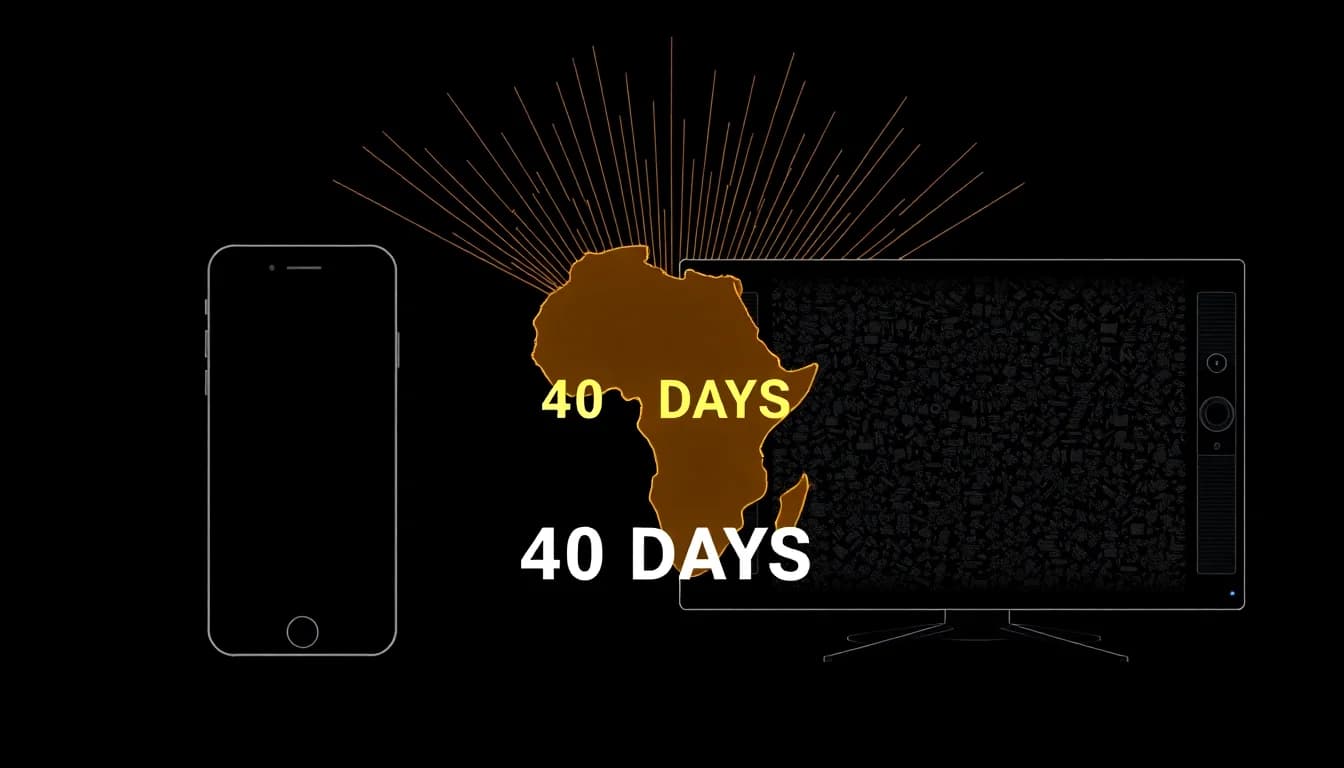
Securing broadcast rights is not the same as delivering broadcast equity. SABC's 40-day countdown campaign to the 2026 tournament makes this distinction impossible to ignore — and we think it exposes one of the most consequential gaps in global football coverage right now.
What SABC is actually offering
The South African Broadcasting Corporation launched its countdown campaign on 2 May 2026, forty days before the tournament kicks off. The strategy distributes live matches across two channels: SABC 3, the corporation's free-to-air linear television service, and SABC Plus, its streaming platform promoted primarily through a mobile app download. The campaign's loudest promotional push directs audiences toward the app — a deliberate modernisation signal from a public broadcaster competing in an increasingly digital rights landscape.
African nations made significant strides in securing World Cup broadcast rights following the 2022 tournament. Post-Qatar negotiations produced a more favourable rights environment across the continent, with public broadcasters gaining footholds previously held by pay-TV operators. SABC's dual-channel approach reflects that progress. On paper, a public broadcaster running both linear and streaming coverage looks like a model for inclusive access.
Why the app metric is the wrong metric
The problem is infrastructure. According to World Bank and ITU data, internet penetration across sub-Saharan Africa sits below 40% in rural areas. That is not a marginal figure — rural populations represent the majority of fans across much of the continent. A streaming-first promotional strategy, anchored to app downloads and stable data connections, concentrates World Cup access among urban, higher-income audiences who already have the most access to football content. It does not reach the households that have been waiting decades for equitable coverage.
SABC 3 remains available and free. But when the primary distribution push is mobile-app-first, the linear channel becomes a secondary signal — less promoted, less resourced in the broadcaster's own communications, and increasingly framed as legacy infrastructure rather than the backbone of public access. The danger is not that streaming exists. The danger is that streaming-first framing normalises a two-tier system in which connectivity determines who gets to watch the 2026 tournament.
Is SABC Plus still progress?
The honest counter-argument deserves real engagement: SABC Plus represents genuine infrastructure investment, and more South African fans will have streaming access to the 2026 tournament than they did in 2022. That is true. Broadcasters cannot hold modernisation hostage to the slowest adoption curve, and building streaming capacity now creates the foundation for genuinely wider access as connectivity improves. Dismissing the app entirely would be wrong.
But progress in distribution is not the same as equity in access. A broadcaster can expand its technical footprint while simultaneously narrowing its effective audience if that expansion is not matched by the infrastructure that makes it usable. The 40% rural internet penetration figure is not a temporary inconvenience to be designed around later — it is the structural condition under which SABC's strategy will operate during this tournament. Calling a streaming-first rollout a win for African fandom because it works well in Johannesburg and Cape Town is the definition of a false promise.
Our verdict
We expect this gap to become more visible, not less, once the 2026 tournament begins and viewership data starts to surface. SABC Plus will post urban streaming numbers that look positive in isolation. They will not tell the story of who was left offline. The broadcasters — and FIFA — that treat rural connectivity as someone else's problem are building a two-tier World Cup whether they intend to or not. The most important sentence in SABC's 40-day campaign is the one nobody is saying: broadcast rights mean nothing without the infrastructure to redeem them.
This article was researched and drafted with AI assistance and reviewed by our editorial team.