 Spain
SpainThe 2026 World Cup final is not just a football match. It is a referendum on two philosophies that have spent decades arguing which one actually wins tournaments, and on Sunday both sides get to make their case simultaneously. We think Spain are the better-constructed team and the deserving favorites, but Argentina's model is not a gamble: it is a proven, repeatable system that dismantles exactly the kind of opponent Spain have feasted on all tournament.
Spain's defensive record is not a coincidence
Five consecutive clean sheets heading into a World Cup final is not a run built on luck or weak opposition. Spain's shutout streak reflects a structural identity: a press that operates in coordinated waves, a midfield that rotates possession so efficiently that opponents spend most of their energy recovering shape rather than building attacks, and a defensive line calibrated to hold high without exposure. The quality of chances conceded across the tournament has been among the lowest recorded by any finalist in recent editions of the competition.
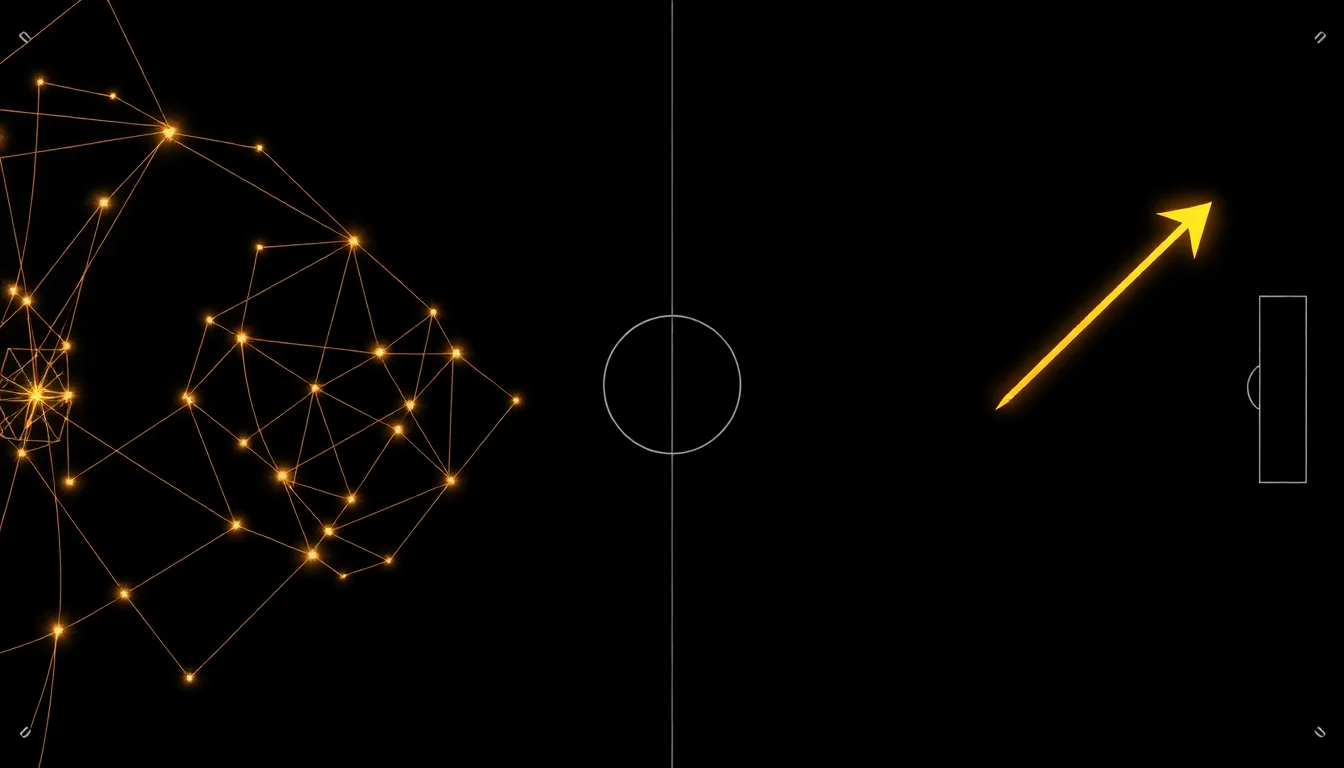
The system starts high up the pitch. Spain's press is not the blunt, sprinting pressure that burns out by the hour mark; it is a position-oriented trap that funnels opponents into zones where the ball can be recovered and immediately recycled. By the time a passing line opens for the opposition, Spain's shape has already reset. For teams who rely on transition, this is suffocating. For Argentina, who have made transition their central weapon, it is the specific problem they have never faced in this tournament at this level of execution.
Argentina reached two consecutive World Cup finals, winning in 2022 and returning to the same stage now, by accepting that possession is not the point. Their model treats the ball as a resource to be spent wisely rather than hoarded. They defend compactly, absorb pressure in organized blocks, and then release through the speed and decision-making of players operating in the half-spaces between a disorganized opposition. Against England-style opponents who commit bodies forward, the gaps appear naturally. Spain do not commit bodies forward recklessly. That is the central tension of Sunday's match.
Yamal's width and Spain's structural pressure
Lamine Yamal's role in this final matters beyond the headline matchup with Messi. Yamal's positioning on the right wing is not decorative: it pins Argentina's left back, which creates interior space for Spain's midfield runners arriving late into the penalty area. When Yamal drives inside, it generates overloads centrally. When he stays wide and demands the ball to feet, it stretches Argentina's defensive shape horizontally and opens the central channels that Spain's midfield is designed to exploit on the second pass.
Argentina's defensive structure has held against these kinds of wide threats before, but not against a team whose press coordination prevents the transition entirely. The danger for Argentina is not a single piece of Yamal skill. The danger is that Spain's shape limits the speed of Argentina's counter so consistently that Messi and the attacking players receive the ball in static, organized defensive conditions rather than in the chaotic, recovering moments where they do their best work. Spain's midfield control does not just generate possession statistics: it controls the tempo of the game to the point where Argentina's asymmetric model is never given the environment it needs to operate.
The Messi question: moment versus system
Here is the counter-argument, and it deserves full weight before we dismiss it. Argentina's model has worked precisely because it contains a player capable of manufacturing a decisive moment from nothing. Messi's presence in the final third is not simply about individual quality in the abstract: it is a structural fact that forces Spain to dedicate defensive attention that would otherwise reinforce their press coordination. Every time Spain's press commits an extra body, they create a small pocket of space somewhere else. Against most opponents, that pocket goes unnoticed. Against Messi, it becomes a through ball.
The case for Argentina upsetting Spain's structure is real: Spain's press requires collective timing, and one moment of disorganization at the highest level of the tournament, against the most experienced player in the competition's history, can and does produce goals. Argentina's bench depth also provides tactical flexibility in the second half that has not been fully tested yet. Their ability to shift shape and personnel without losing defensive compactness gives them options that few other finalists have possessed.
But here is the refutation: Spain's midfield control does not just limit chance quality for opponents. It limits the number of moments where any individual, including Messi, receives the ball in the conditions he needs. You cannot engineer a transcendent individual moment if the ball spends 70 percent of the match on the other side of the pitch, and the 30 percent where Argentina have possession is spent in organized, defended space rather than open transition. The 2022 final worked for Argentina partly because France's defensive structure was inconsistent. Spain's has been the most consistent in this tournament by a clear margin.
The philosophical verdict
This is genuinely the most philosophically distinct World Cup final in recent memory. Spain 2010 proved possession could win the tournament. Argentina 2022 proved it was not required. Now both models meet directly, with no ambiguity about which side holds each philosophy.
We believe Spain win this final, but not comfortably and not without surviving at least one moment where Argentina's model almost works exactly as intended. The clean sheet streak ends here: Argentina are not built to be shut out for 90 minutes by design, and they will create. The question is whether Spain's structural advantages limit those creations to one or fewer while their own system generates the two or three goal-level opportunities that their midfield control has produced all tournament.
Possession wins on Sunday. Spain 2-1, with the winning goal coming from the type of late, midfield-originated move that Argentina simply have no answer for when their defensive shape has been stretched across 80 minutes of sustained pressure. The stronger system beats the better story.
This article was researched and drafted with AI assistance and reviewed by our editorial team.