 China
ChinaThe game before the game
The 2026 World Cup has already produced its most consequential plays, and none of them involved a football. We are convinced that the nations shaping this tournament's lasting meaning are not the ones with the deepest squads — they are the ones with the sharpest cultural infrastructure, the clearest music strategy, and the strongest grip on narrative before a single whistle blows.
This is not a peripheral story. It is the story of how tournaments are actually remembered.
Liu Yuning, KuGou, and 315 million reasons to pay attention
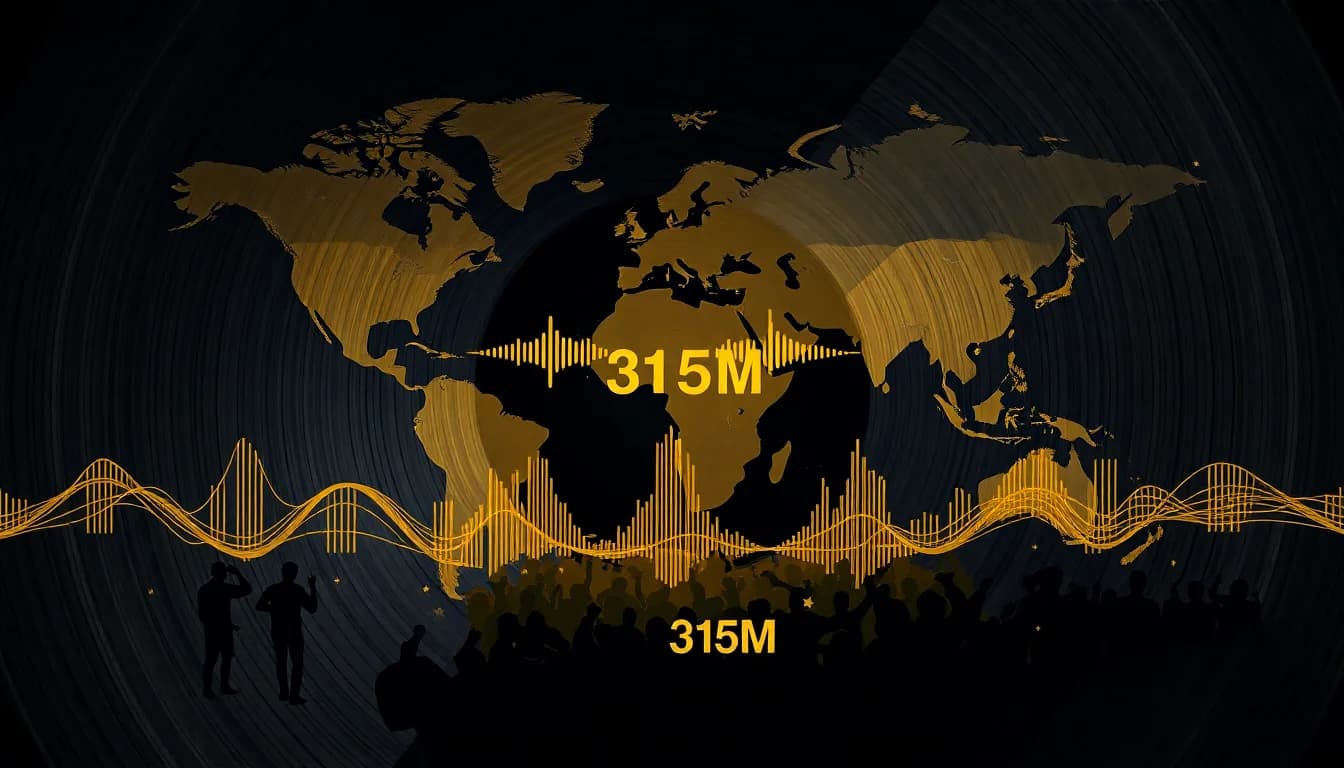
The numbers from China's World Cup presence are not easy to dismiss. Liu Yuning's JUMP — the Coca-Cola official 2026 World Cup theme — has surpassed 315 million listeners on KuGou, China's leading music streaming platform, as of early May 2026. That figure places it at the summit of KuGou's rankings, sitting alongside Liu Yuning's collaboration with Colombian artist J Balvin, which has replicated the same dominance in real-time streaming charts.
For context: Qatar 2022's centrally produced FIFA official songs were broadly acknowledged as cultural misfires. They generated minimal organic engagement, failed to penetrate local markets with any depth, and left the tournament without a defining sonic identity. The 2026 tournament has taken a structurally different approach.
Coca-Cola's franchised music model does not attempt to produce one globally neutral anthem. Instead, it commissions market-specific artists — Liu Yuning for East Asian audiences, J Balvin for Latin American markets — and allows each version to function as a genuine cultural artifact within its own context. The result is not a diluted compromise but a series of locally resonant hits that add up to a global presence. Liu Yuning's 315 million KuGou listeners are the clearest proof that the model works. A FIFA-centralized song rarely, if ever, produced numbers of that scale in a single regional market.
The J Balvin collaboration extends the reach further. J Balvin's audience skews heavily toward Latin America and the United States — two of the three host territories for the 2026 tournament. Ranking dominance in those streaming markets before the tournament begins is not a vanity metric. It is brand territory claimed early.
From anthems to delegations: the architecture of soft power
Nation branding through music at a World Cup operates on at least three levels, and the 2026 tournament has made each of them visible.
The first is the official theme strategy — the Coca-Cola model described above. The second is the pre-tournament anthem drop, a tactic Scotland has deployed ahead of the 2026 tournament with a release timed to build the tartan army's identity and media presence before the squad even arrives in North America. Scotland's tartan army has one of world football's most distinctive supporter cultures, and anchoring that culture in a specific piece of music before the tournament calendar fills up with competing stories is a calculated act of narrative positioning. The anthem exists to ensure that coverage of Scotland — in any market — carries a sonic and emotional reference point the nation itself controls.
The third level is the cultural delegation model. South Africa's 20-artist delegation model represents the most structurally ambitious approach to soft power seen at a World Cup in recent memory. Rather than relying on a single flagship track or a passive association with a sponsor's theme, South Africa deployed a coordinated infrastructure of artists designed to make cultural influence visible, sustained, and multi-platform. The delegation model treats tournament presence not as a marketing add-on but as a parallel campaign running alongside the football squad — one with its own logistics, its own media commitments, and its own audience targets.
Jamaica's presence in the tournament's soundtrack conversation reflects a similar logic. A nation whose cultural exports — across music, language, and style — have historically punched well above its population size understands that a World Cup is an accelerant. The question for Jamaica, as for every nation in this space, is not whether to engage with the cultural moment but how deliberately to engineer it.
Taken together, these three strategies — franchised themes, pre-tournament anthem drops, and artist delegation models — represent a new competitive layer in international football. Nations that engage with it seriously are building advantages that exist entirely outside the technical reports and tactical dossiers that dominate pre-tournament analysis.
The counter-argument: does any of this matter when the results come in?
The strongest version of the opposing case runs like this: match performance is the only thing that generates lasting cultural impact. Argentina's 2022 triumph created more organic content, more genuine cultural resonance, and more enduring national mythology than any official song or delegation model could manufacture. Spain's tiki-taka era did more for Spanish cultural soft power than any marketing campaign. The music, in this reading, is noise — and the scoreboard is the signal.
This argument has real force, and we do not intend to flatten it. Tournament results do generate irreplaceable cultural moments. But it conflates two separate questions: what creates the biggest singular spike, and what builds the most durable, sustained presence. A World Cup champion gets a spike. A nation with a coherent cultural strategy gets compound interest.
Liu Yuning's 315 million KuGou listeners existed before the 2026 tournament began. That audience is primed, culturally associated with the tournament, and positioned to amplify any positive result China achieves on the pitch. South Africa's 20-artist delegation does not replace the Bafana Bafana squad — it multiplies whatever story that squad writes. Scotland's anthem drop does not guarantee a result, but it ensures that Scotland's presence in the tournament conversation is felt by audiences who will never watch a qualifier. The music does not compete with the football. It extends the football's reach into markets and audiences the football alone cannot touch.
The Qatar 2022 counterexample reinforces rather than undermines this point. The centralized FIFA song strategy underperformed precisely because it attempted to be culturally everywhere and ended up being culturally nowhere. The 2026 approach — decentralized, market-specific, artist-led — has already produced 315 million listeners in a single market. That is not supplementary. That is primary.
Conclusion: the tournament narrative belongs to those who build it
We expect the gap between nations with deliberate cultural strategies and those without one to become significantly clearer as the 2026 tournament unfolds. China's streaming dominance, South Africa's delegation infrastructure, Scotland's pre-tournament anthem positioning — these are not marketing footnotes. They are competitive acts.
The Coca-Cola franchised model has already demonstrated that the 2022 approach was not the ceiling but the floor. Expect other sponsors and nations to replicate and extend it. Expect the 20-artist delegation model to influence how future squads think about their non-playing travelling parties. Expect pre-tournament anthem drops to become as standard as official squad announcements.
The nations that understand this are not chasing a secondary prize. They are building the frame through which the primary prize — the football itself — will be seen, remembered, and retold. Liu Yuning's 315 million listeners already know what the 2026 tournament sounds like. The rest of the world is about to find out.
This article was researched and drafted with AI assistance and reviewed by our editorial team.