 Argentina
Argentina look every inch the defending champions right now. We think that surface reading is exactly the kind of comfortable narrative that gets title-chasing sides knocked out before the semi-finals.
The 2-0 win over Austria confirmed everything that is both right and quietly concerning about this Argentina squad. Messi scored twice, Martínez was untroubled for long stretches, and the group stage is done without a single defeat. On paper, this is a team operating at full capacity. Dig into the shape, the spacing, and the horizontal coverage, and a more complicated picture emerges. Argentina are advancing into the knockout rounds carrying a structural vulnerability that disciplined group-stage opponents have not yet had the full tactical clarity, or the personnel, to punish.
The narrow design that clean sheets conceal
Argentina's defensive model is built on compactness and pressing intensity. The back line holds a narrow horizontal band, midfield presses high to recover the ball quickly, and the entire system depends on winning possession before the opposition can shift the ball wide with speed and purpose. It worked in Qatar in 2022. It is working again now. What it does not do is provide genuine positional depth across the full width of the pitch.
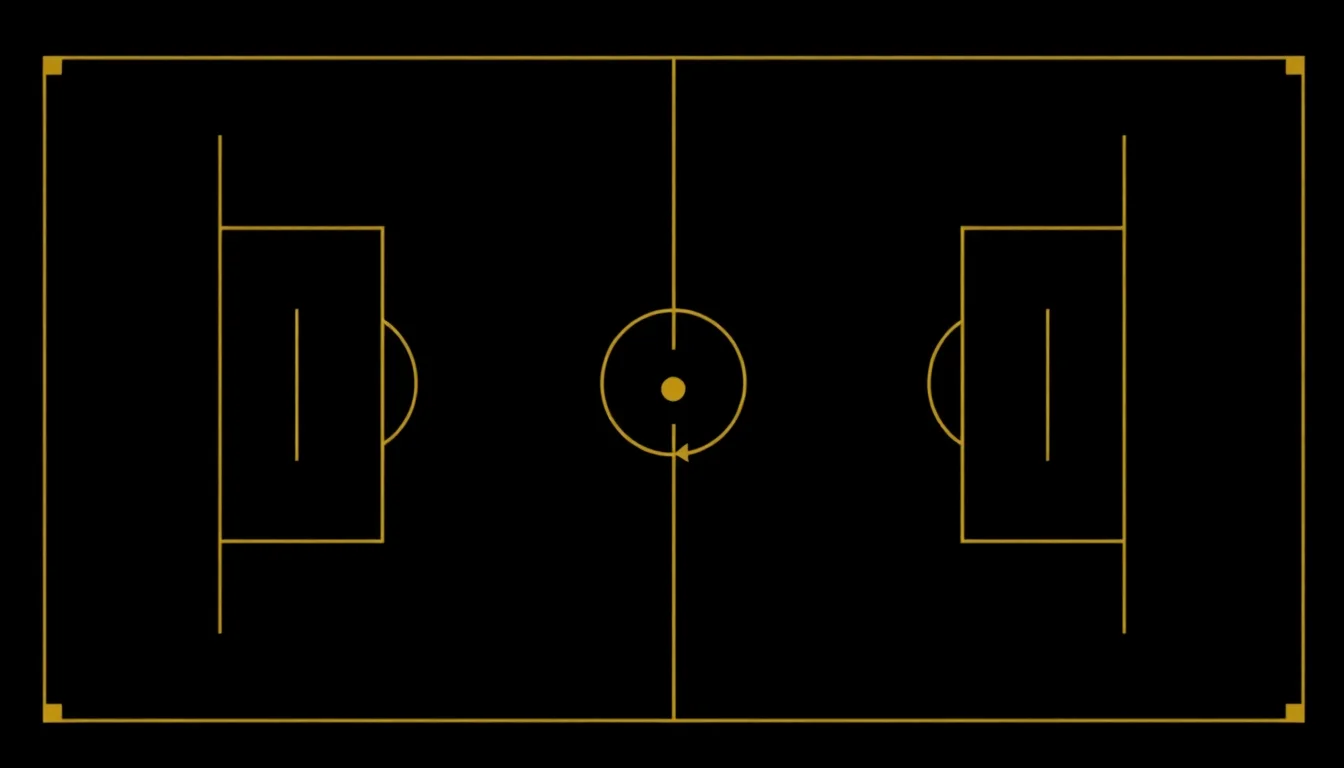
The issue is geometric. When a team defends narrowly and presses high, it creates pockets of space on the flanks that are not covered by a second line of defensive shape. If the press is beaten, if a midfielder is bypassed or dragged centrally, the wide areas open. Against a team that can play quickly in behind the fullbacks, or one that uses wide forwards capable of stretching the pitch horizontally before cutting inward, Argentina's compact block becomes exposed along its outer edges. Three clean sheets do not disprove that vulnerability. They reflect the quality of the opponents faced, and the effectiveness of pressing a team before those spaces could be properly accessed.
Against Austria specifically, the Austrians showed some ambition in the first half but lacked the forward movement and wide-area execution to consistently get in behind Argentina's high defensive line. When Messi scored the opener, the game closed as a tactical contest. The second goal was emphatic. But Austria creating transition moments in that first period, however briefly, hinted at exactly the kind of approach that could be refined and weaponised by a side with better wide attackers.
What the 2022 template actually tells us
Argentina's 2022 World Cup run is the most cited evidence for the durability of this system, and it deserves honest scrutiny rather than simple reverence. The defensive template in Qatar was effective. It was also stressed. Saudi Arabia exploited the high line in a manner that produced one of the most analysed upsets in recent tournament history. The Netherlands pushed Argentina to the absolute limit in the quarter-final, with Wout Weghorst's late goals demonstrating that high-profile, physically direct sides can disrupt the compact structure when they commit bodies forward late in matches.
Argentina survived both of those pressure tests. They won the tournament. But surviving a vulnerability is not the same as eliminating it. The same geometric weaknesses that existed in 2022 are present in 2026. The system has not been fundamentally redesigned. The high pressing model, the narrow backline, the reliance on Martínez as a sweeper-keeper commanding a high defensive line, all of it is structurally unchanged. What has changed is that more teams at this tournament have had four years to study that blueprint.
Martínez and the numbers behind the clean sheet count
It would be dishonest to frame this purely as a defensive liability piece without acknowledging Emiliano Martínez's contribution. His performances across the group stage have been authoritative. His ability to read pressing triggers, to act as an extra outfield player when Argentina push their defensive line high, and to command his area against set pieces makes him a genuine mitigating factor against the spatial vulnerabilities described above.
Martínez's clean sheet record at this tournament is a significant data point. It reflects both individual quality and collective defensive organisation. A goalkeeper of his ability can compensate for flank exposure on individual occasions, making saves when pressing is beaten and a wide delivery reaches its target. What he cannot do is cover both wide channels simultaneously. In a knockout stage encounter against a team deploying two fast wide forwards, the workload shifts from one exceptional save to a repeated structural test across 90 minutes.
Messi's form adds another layer of context. His brace against Austria puts him at the top of the tournament scoring chart. If Argentina are hunting a goal, or protecting a lead, the tactical picture shifts. A Messi-led pressing disruption from the front is a meaningful tactical weapon, and the scoreboard pressure his goals create can limit how freely opponents implement a patient wide-area strategy. A team chasing the game late tends not to execute horizontal stretching with the same composure as one playing from level.
The steelman case for Argentina's solidity
The strongest counter-argument here is direct: Austria is not a soft touch. Austria qualified from a competitive European group, carry technical quality in midfield, and pressed Argentina with genuine energy in the opening phases of the match. Keeping a clean sheet against them is not a routine outcome. It reflects defensive discipline and organisational quality that cannot be waved away.
Furthermore, tournament football is not purely a tactical exercise. Momentum, squad cohesion, and the psychological weight of being defending champions matter. Argentina under the current setup have demonstrated they can manage tournament pressure across multiple stages. The 2022 final against France, a match that swung dramatically multiple times, showed this squad has the mental capacity to hold defensive structure even when the game is in genuine crisis.
That all stands. We are not arguing Argentina are fragile. We are arguing that a team which progresses on the back of clean sheets built through compact pressing, without addressing flank coverage, will eventually face an opponent sufficiently equipped to turn that geometric limitation into a decisive advantage.
What the knockout rounds demand
The 2026 tournament's expanded format means Argentina have more knockout matches to navigate than any previous edition. That is not a trivial consideration for a defensive system that depends on pressing intensity and physical commitment across the width of a high line. Pressing systems have an energy cost. Over a longer knockout campaign, with reduced recovery time, the capacity to maintain that press at tournament intensity across 90 minutes becomes a genuine endurance question, not merely a tactical one.
The teams most capable of exposing the narrow template are those with wide forwards who can operate between the lines, fullbacks willing to overlap at pace, and a central midfield capable of circulating quickly enough to force lateral defensive movement before the press can be set. Several squads remaining in this tournament fit that profile. They know it. Their coaching teams have been watching Argentina's group matches with exactly this analysis in mind.
Our prediction
We expect Argentina to reach the quarter-finals. Messi's form alone makes them dangerous in any match, and Martínez is performing at a level that covers structural gaps a lesser goalkeeper could not. But we also expect the narrow defensive template to be tested in a way that group-stage opponents were neither willing nor equipped to do. When that test comes, the outcome will depend on whether Argentina can adjust their shape mid-tournament, or whether the system's geometric limitations become the story of their exit.
If a wide-attacking side with genuine pace and horizontal stretch meets Argentina in the last sixteen or the quarter-finals, we are not backing the clean sheet to hold. The defending champions are good. Their defensive shape is a problem they have carried for four years, and the knockout rounds are where problems get found.
This article was researched and drafted with AI assistance and reviewed by our editorial team.