 United States
The 10-minute illusion
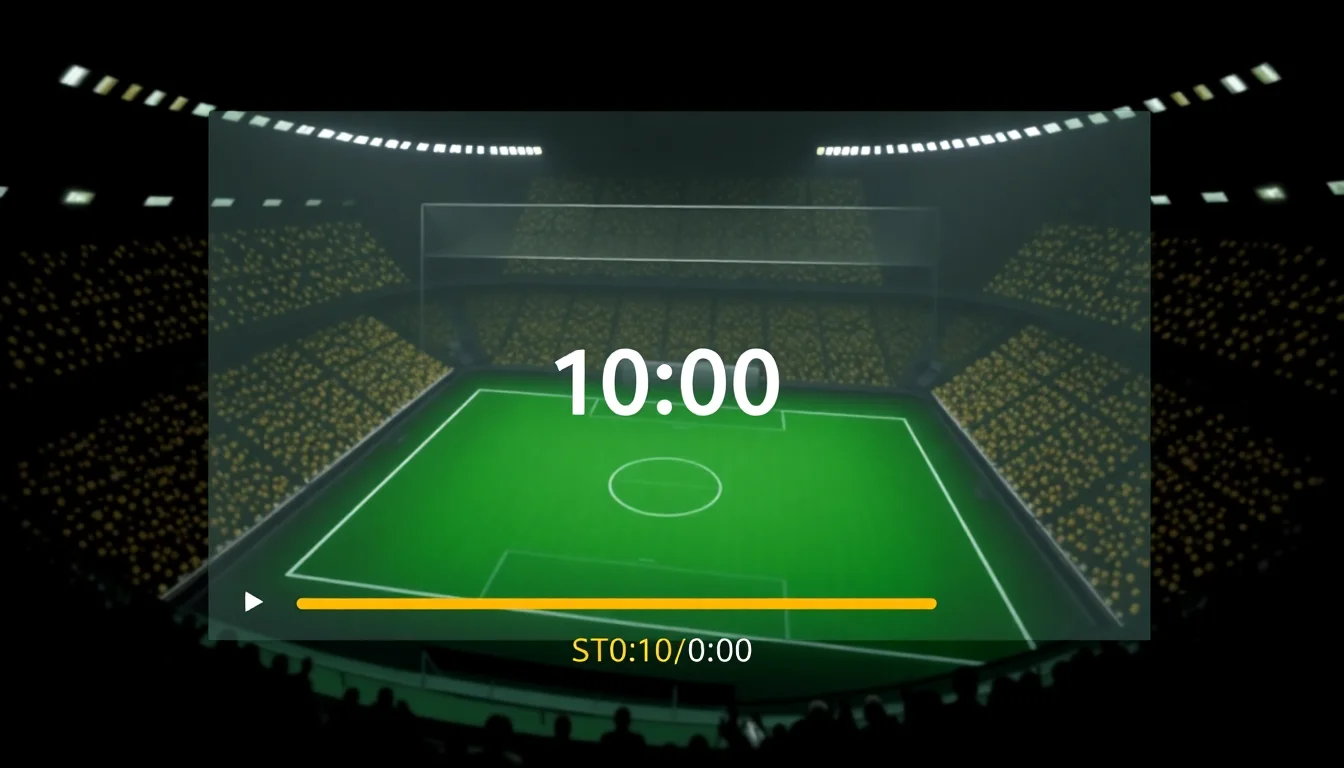
FIFA's YouTube streaming deal for the 2026 tournament looked, for a moment, like progress. It is a revenue protection exercise dressed in the language of inclusion. The mechanics confirm it: viewers anywhere in the world can stream a match on YouTube for exactly ten minutes before the platform redirects them to a regional paid broadcaster. Most games never return to free viewing at all. Only a vague category of "select" matches will be available in full — and FIFA has declined to specify which ones.
The numbers here do the damage quietly. A ten-minute window covers roughly the first eight to nine minutes of a match, plus stoppages — enough to catch an early goal, maybe, but not enough to follow a game. The redirect sends viewers toward subscription services that vary in cost and availability by region. For fans in markets where those broadcasters carry steep subscription fees or geographic restrictions, the YouTube presence is not access. It is a trailer.
A step back from 2022
The 2022 Qatar cycle offered a meaningful comparison point. beIN Sports provided broader free streaming access across several regions, particularly across the Middle East, North Africa, and parts of Asia. That model was imperfect and geographically uneven, but it delivered full matches to audiences without a payment barrier. The 2026 model is more restrictive by design. FIFA has taken a streaming infrastructure that reached a global audience and placed a ten-minute meter on it.
This sits in direct tension with Infantino's stated "global accessibility" mandate — the public position that the 2026 tournament, co-hosted across the United States, Canada, and Mexico, would be the most widely watched and accessible in history. Expanding the tournament to 48 nations and three host countries signals ambition. Capping free digital access at ten minutes signals something else entirely.
The broadcaster exclusivity argument has limits
The reasonable counter-position is that exclusivity deals are the financial engine that makes a tournament this size possible. Broadcasters pay hundreds of millions of dollars for regional rights, and a full free stream on YouTube would hollow out that value immediately. A ten-minute preview, the argument goes, functions as a marketing funnel — it hooks viewers and converts them to paying subscribers. That is a coherent commercial rationale.
But it does not survive contact with the access data. Funnel logic assumes the viewer has a realistic path to conversion — a payable subscription, a compatible device, an available service in their country. For a substantial portion of the global audience FIFA claims to be reaching, that path does not exist cleanly. The preview does not function as a funnel if the exit ramp leads nowhere affordable. The 2022 model proved broader free access was operationally viable. FIFA chose not to replicate it.
What the 10-minute window actually tells us
The architecture of this deal is not a compromise between access and revenue. It is a revenue strategy with an access veneer. FIFA captures the goodwill headline — "World Cup 2026 matches on YouTube" — while ensuring that virtually all monetizable viewing flows through paid channels. The ten-minute window is long enough to generate promotional clips and social engagement. It is not long enough to watch a football match.
Our read
We have no objection to FIFA generating broadcast revenue — the organisation needs it, and broadcasters who pay for rights deserve protection. What we object to is the framing. If FIFA's leadership continues to invoke global accessibility as a core value of the 2026 tournament, the streaming model it has built directly contradicts that claim. Call the YouTube deal what it is: a promotional tool that occasionally, for select matches that remain undefined, becomes free football.
Our prediction: the backlash to the ten-minute redirect will accelerate during the group stage, when a high-profile match in an underserved broadcast market hits the paywall and the clips go viral for the wrong reasons. At that point, FIFA will either quietly expand the number of "select" matches or issue a statement about regional access initiatives. Neither will address the structural problem. The 2026 tournament will be the most-watched in history — but that record will be built on paid subscriptions, not open access, and FIFA should stop pretending otherwise.
This article was researched and drafted with AI assistance and reviewed by our editorial team.