 India
IndiaIndia's cricket selection model is doing what football academies cannot
While elite football nations lock talent inside expensive private academies, India's women's cricket program has built something more durable: a transparent pipeline from state cricket to the national squad. We think Nandni Sharma's maiden call-up to the T20 World Cup 2026 squad is the clearest evidence yet that India's depth engineering is functional — not aspirational.
The evidence: merit over connections
Sharma, 24, earned her place in the squad through domestic cricket performance alone. No back-room selection politics, no academy fee paid by a family chasing a shortcut — just state-level cricket results feeding directly into national consideration. The BCCI's official announcement confirmed the selection criteria, and the signal was unambiguous: domestic numbers drove the decision.
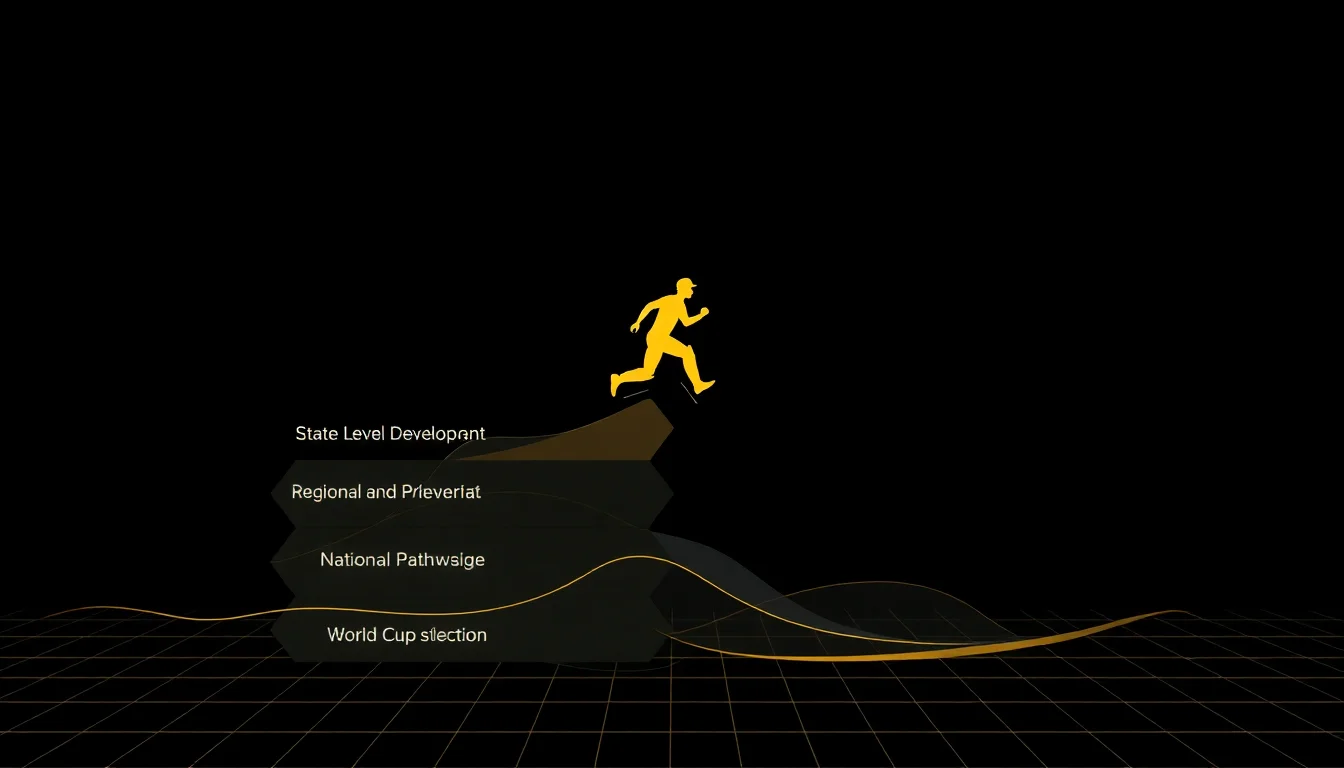
India's women's T20 program has systematized this pathway more effectively than most sporting nations across any code. The selection chain runs from state associations through regional competition and into the national squad, with centralized BCCI oversight providing consistency at every stage. The result is functional squad depth: India's women's T20 side has demonstrated rotation across its squad without the visible drop in quality that typically exposes thin pipelines under tournament pressure.
How India's pipeline works — and why football should pay attention
India's domestic-to-national model operates on three principles that football talent development systems have historically struggled to replicate at scale:
- State-level entry points: Any player competing in BCCI-affiliated state cricket can enter the selection funnel without paying academy fees or relocating to a private development centre.
- Merit-based advancement: Selection at each level is tied to measurable performance in competitive domestic cricket, not to a scout's subjective judgment at age 14.
- Centralized oversight: The BCCI controls the full pipeline, eliminating the fragmentation that occurs when private clubs, national federations, and regional associations compete over the same pool of talent.
Historically, India women's cricket built this system gradually, but the current squad reflects the output of a mature identification mechanism — one that produces depth rather than just headline names.
The counter-argument deserves a direct answer
The obvious objection is that cricket's pipeline model cannot simply be transplanted into football. BCCI centralization gives India control that FIFA member associations, operating across 211 federations with varying resources, structurally cannot replicate. Cricket's domestic calendar, squad sizes, and financial model differ from football's. These are real constraints — we are not dismissing them. But the objection proves too much. The core principle — state-level access, transparent merit criteria, centralized oversight of the selection chain — is not cricket-specific. Several football federations, particularly in Asia and Africa, have demonstrated that centralized youth identification can work within FIFA's framework. The barrier is political will, not structural impossibility. India's cricket model is not a blueprint to copy directly; it is a proof of concept that transparent pipelines produce depth, and that depth wins tournaments.
Conclusion: this is what squad-building looks like
Nandni Sharma's call-up is not a feel-good story about a young player getting a chance. It is data. It tells us that India's women's cricket selection system is identifying the right players at the right time — and doing so through a process that is replicable and auditable. We expect India's T20 World Cup 2026 campaign to be shaped by exactly this kind of depth: players who have earned their place through competition, not connections. If Asian football development systems are watching, they should be taking notes. The most competitive teams at the 2026 tournament will not be the ones with the biggest academy budgets — they will be the ones who figured out how to turn a domestic pipeline into tournament-ready depth.
This article was researched and drafted with AI assistance and reviewed by our editorial team.