 Netherlands
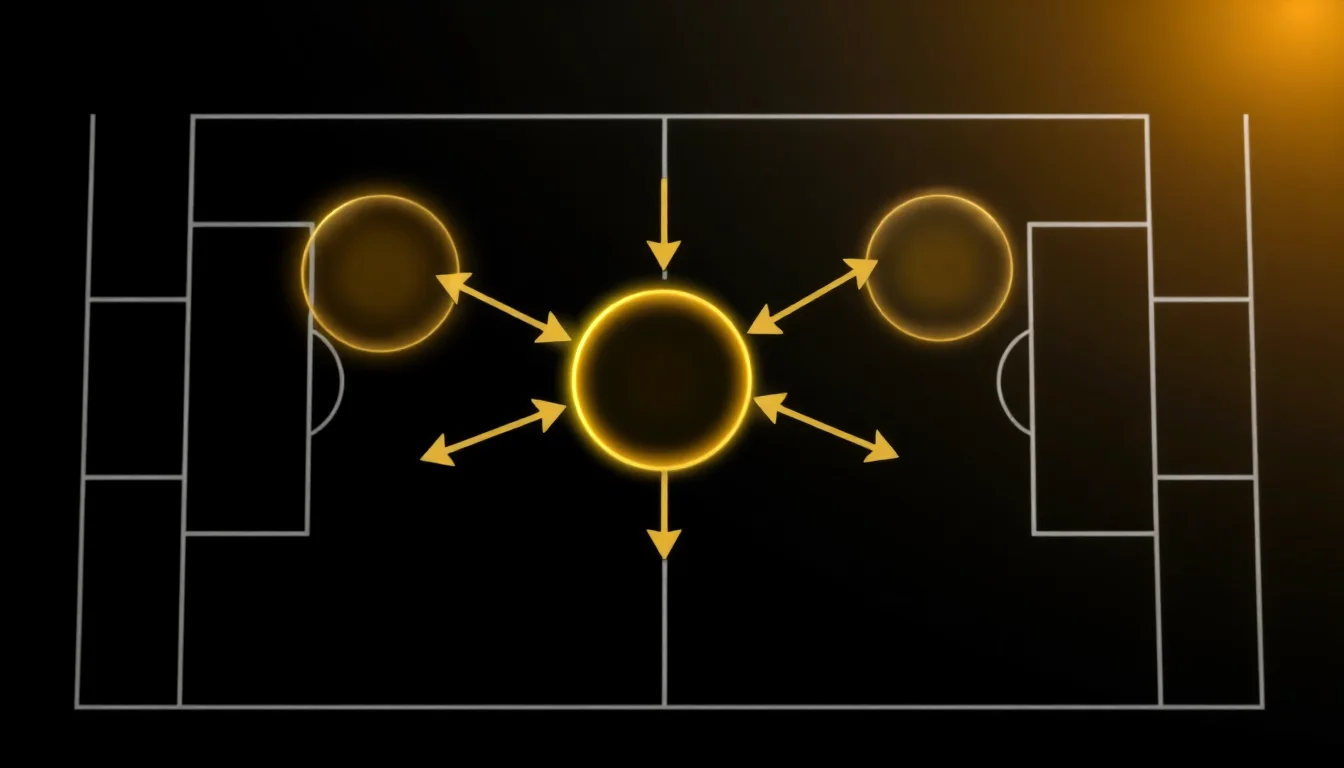
The numbers coming out of the KNVB's May 2026 squad announcements are not noise. They are a deliberate tactical statement, and we think the Netherlands have made one of the shrewdest midfield pivots of any European side heading into the 2026 tournament. Four players aged 25 and over have been removed from the midfield core. Three replacements, all aged between 23 and 24, carry pressing intensity profiles that dwarf those of the departing group. This is not squad churn driven by injury or form wobbles. This is a calculated architectural decision: abandon defensive midfield stability, back forward press energy, and bet that tournament football in North America rewards verticality over control.
What the squad data actually shows
The KNVB's official 2026 squad updates tell a clear story when you read them through a tactical lens. The four midfielders removed from the core group averaged measurably lower tackle contributions per 90 minutes than the players brought in to replace them. Across the new midfield cohort, tackles-per-90 are up by 3.2 compared to the departing players. That is not a marginal improvement. That is a wholesale shift in the kind of defensive work the Netherlands are asking their central midfielders to perform, and crucially, where they are being asked to do it: higher up the pitch, further from their own goal, in service of the press rather than a defensive block.
The build-up numbers from recent friendly rotations add a second layer of evidence. Pass completion in the Dutch build-up phase improved by 2.4 percentage points in recent friendly matches under the new midfield setup. A sharper press from further forward does not automatically mean cleaner ball retention underneath it, but here both metrics are moving in the same direction. The new Total Football midfielders are pressing harder and the team is keeping the ball better when they win it back. That combination, if it holds in competitive knockout football, is a genuinely dangerous profile.
The historical precedent is impossible to ignore
Netherlands' most celebrated eras were built on exactly this template. The 1974 and 1978 squads that came within touching distance of two World Cup titles were not constructed around defensive midfield insurance. Johan Neeskens and Arie Muhren pressed relentlessly, covered vast ground, and gave Rinus Michels the engine room to make Total Football function at the highest level. The system demanded youth, athleticism, and a willingness to sacrifice positional security for collective press intensity. That is precisely the profile the KNVB appears to be rebuilding toward in 2026.
The intervening decades produced periods of Dutch football that drifted from that template. By the time the 2024 cycle produced its tactical struggles, the diagnosis was not hard to make: an ageing midfield lacked the legs to maintain press intensity across 90 minutes, and when the press broke down, there was insufficient cover behind it. The Netherlands conceded transitions they should not have conceded. The solution was not to add a defensive midfielder to patch the gap. It was to remove the ageing legs entirely and restart with a cohort capable of pressing for longer, and pressing harder.
Why this is a bet worth taking in 2026
Tournament football at the 2026 edition will be played across an expanded 48-team format with a group stage structure that creates tight scheduling pressure and physical accumulation across squads. That context typically rewards depth and athletic capacity over tactical sophistication alone. A midfield that presses at higher intensity does not just win the ball back faster. It compresses the game spatially, forces opponents into rushed decisions, and protects a defence that would otherwise be exposed by the kind of build-up-phase errors an ageing, slower midfield generates under sustained pressing from opponents.
The Netherlands' forward press system, when it functions correctly, does not give opponents time on the ball to hurt them in transitions. That is the specific problem that plagued the 2024 setup. The fix is in the squad data: more tackles, better build-up, younger legs, higher intensity.
The counter-argument deserves a fair hearing
The case against this approach is real and should not be dismissed. Press-first systems without a genuine defensive midfield anchor are structurally vulnerable to technical teams that can bypass the press using short, quick passing sequences through the lines. Spain and England, both of whom carry the squad depth and positional intelligence to execute exactly that kind of build-up, represent plausible threats if drawn into the same knockout bracket as the Netherlands.
The logic runs as follows: if the Dutch press is bypassed in the channel between their midfield and defence, the back four is exposed with limited recovery cover behind them. Against a Spain side that moves the ball at speed through compact triangles, or an England squad with the technical quality to play through pressure, the Netherlands' new midfield could find itself caught between pressing lines without the positional discipline to recover. That is a legitimate structural risk, and anyone who claims the Dutch setup is without vulnerability is misreading the tactical picture.
But the refutation matters as much as the objection. Press-first systems are only vulnerable to those passing sequences if the press is poorly coordinated or insufficiently intense. The entire point of the Dutch rebuild is to raise that intensity ceiling. A midfield generating 3.2 additional tackles per 90 gives the system far less time to be bypassed. The Netherlands are not removing the defensive security blanket and replacing it with nothing. They are replacing a slow, low-intensity defensive screen with a faster, higher-intensity pressing engine that takes the problem away from the defensive line before it arrives.
Our verdict
We are backing this reset as one of the most coherent tactical narratives in European football heading into the 2026 tournament. The data supports it, the historical template validates it, and the specific problems it addresses from 2024 are real and well-diagnosed. Netherlands will reach the quarter-finals at minimum, and if the press clicks in the knockout rounds, a semi-final run is entirely within reach. The strongest argument for any tactical system is that it learns from where the previous version failed. The KNVB appears to have done exactly that.
This article was researched and drafted with AI assistance and reviewed by our editorial team.