 Austria
Tournament Prediction: Austria
Austria land in arguably the harshest group of the 2026 finals, drawing defending champions Argentina alongside Algeria and Jordan. Ralf Rangnick's pressing system has rebuilt this squad into a credible European outfit, but Group J will expose exactly how far that rebuild has gone.
Editorial prediction — Gegenpresss team
| Stat | Value |
|---|---|
| **How far?** | Round of 32 |
| **Top scorer** | Christoph Baumgartner (RB Leipzig) |
| **Rising star** | Florian Grillitsch (30) |
| **Potential flop** | Marcel Sabitzer |
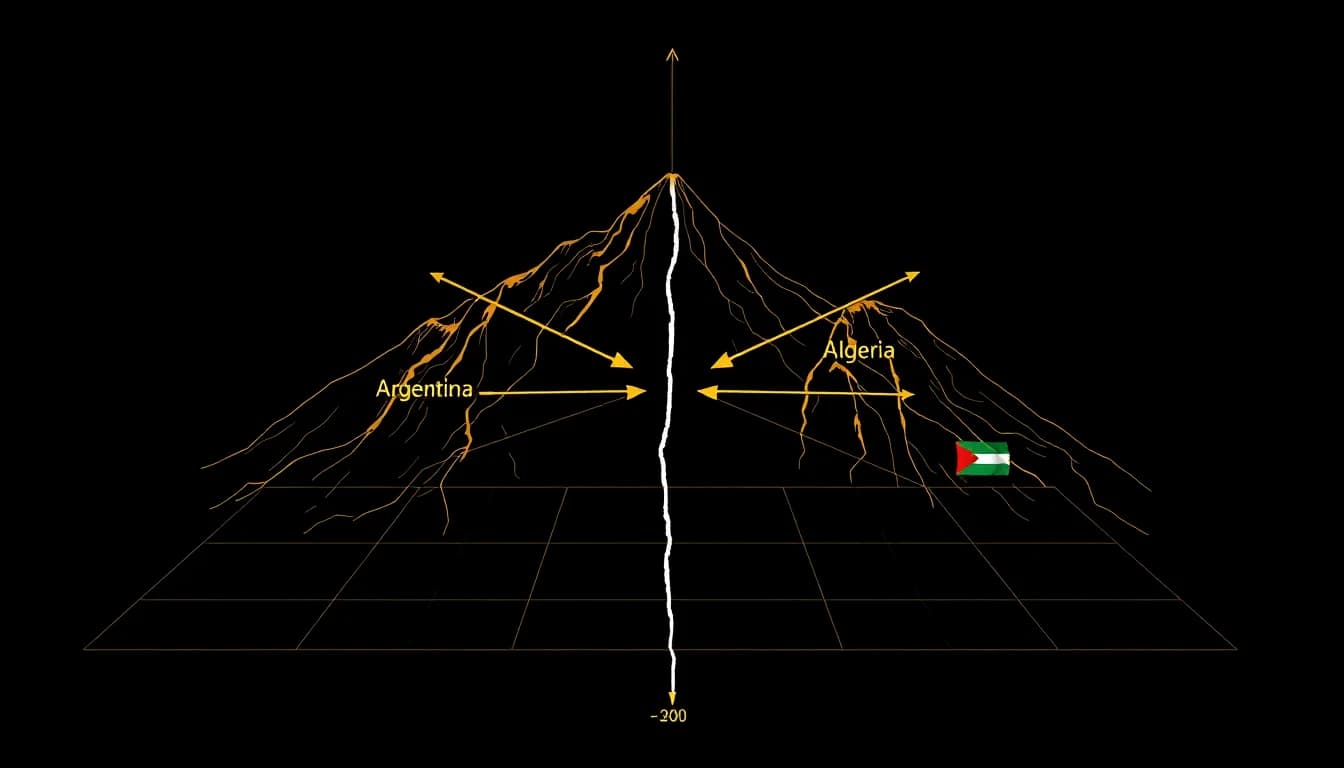
Surviving Group J: A Mountain with Argentina at the Summit
Will Austria qualify from Group J? No. A Round of 32 exit is most probable, and three reasons explain why. First, Argentina enter as defending champions with a settled, deep squad built for exactly this kind of tournament. Second, Austria's defensive record under pressure is shaky, as evidenced by the 0-2 loss to Switzerland on May 28, 2026, just days before the squad departed for the finals. Third, Algeria represent a direct, well-organised side capable of matching Austria's intensity and beating them to second place on points or goal difference.
The group structure gives Austria a theoretical route through. Jordan are overmatched at this level and represent Austria's best opportunity for a convincing win with positive goal difference. The real contest is Austria against Algeria for the runners-up spot, and that final group match will almost certainly determine who advances. Rangnick's squad knows this. Every tactical decision from the Argentina opener will be shaped by the need to arrive at that Algeria fixture in a position to qualify.
Argentina are simply too strong. Their attacking depth and creative output represent a quality gap that no amount of Rangnick's pressing intensity will close across ninety minutes. Austria's realistic target against them is damage limitation: a single-goal defeat preserves goal difference and keeps second place attainable. A heavy loss makes it arithmetically brutal. Against Jordan, Austria need to be clinical and composed, not just efficient, because Algeria will be watching the scoreline.
Austria have climbed the UEFA rankings steadily under Rangnick through structured pressing and defensive organisation. That trajectory is real, and the squad that arrives in North America is genuinely better than the one that exited at the Euro 2024 group stage against France, the Netherlands, and Poland. But better does not mean ready for Argentina. Group J is not a test of progress; it is a test of ceiling.
Baumgartner Bears the Load
Christoph Baumgartner is Austria's primary creative outlet and the player most likely to deliver when it matters. His record of 12 international goals in 51 appearances reflects consistency rather than feast-and-famine returns, and at RB Leipzig he has developed the positional intelligence to operate in tight spaces against organised defences. In a group where Austria must create something against Argentina and convert against Jordan and Algeria, his ability to both score and facilitate gives him the best shot at finishing as the squad's top scorer across three matches.
Baumgartner suits this tournament format precisely because he does not need extended ball retention to be effective. He finds pockets, arrives late into the box, and executes under pressure. Against Argentina's high defensive line, his movement behind the first press will be a weapon Rangnick deploys deliberately.
Florian Grillitsch is the player to watch for those who want to understand how Austria actually function. Now 30 and established as a midfield anchor in Rangnick's system, Grillitsch's ball-recovery work and positional discipline set the tempo for everything Austria build. His ability to screen the backline against Argentina's forward runs will be the difference between a competitive performance and a heavy defeat. If he controls that rhythm, Austria have a chance. If he is overrun, the defence is exposed.
Where it Could Go Wrong
Austria's dependence on Baumgartner is the structural problem that no tactical setup fully solves. Beyond him, the squad lacks a clinical secondary scorer. Grillitsch, Conrad Laimer, and Marcel Sabitzer offer quality in transition and ball recovery, but none of them carries the same goal threat. If Baumgartner is marked out of the game or picks up a knock, Austria's attacking output drops significantly. Set pieces become their next best option, and Rangnick has built reliable corner and free-kick routines, but that is a narrow attacking platform for three consecutive group matches.
Sabitzer is the player we think could underdeliver relative to expectation. He arrives with Champions League pedigree from his time at Bayern Munich and carries the status of a senior leader in this midfield. But his recent club seasons have been disrupted by reported fitness concerns and a shifting role at club level, and his ability to control a match against Argentina's pressing intensity or Algeria's directness is unproven at this level in this form. If he loses the ball in dangerous areas or fades under physical pressure, Austria's midfield stability fractures at the worst possible moment.
Our Read
Austria exit in the Round of 32. We are confident in that call. The Switzerland defeat on May 28 is not a catastrophe, but it is evidence of a squad that is not yet sharp, and Group J leaves no room for a slow start. Argentina will win the group; the question is whether Austria hold their nerve against Algeria. We think they fall just short, either losing that decisive match outright or finishing behind Algeria on goal difference after dropping points against the defending champions.
Rangnick deserves credit for the work done since his appointment. Austria are a better team than their recent tournament record suggests, and they will make Group J competitive. But competitive and advancing are different things. Round of 32 is where this campaign ends, and that is a fair reflection of where Austria stand in the global hierarchy right now.
This article was researched and drafted with AI assistance and reviewed by our editorial team.